What I Built to Run 18 Projects Without Losing a Thread
At a certain scale, staying organized stops being an administrative problem and becomes a leadership one. I built the system that solved it — and the principles behind it are the same ones I'd apply to any complex program.
18 concurrent projects. No portfolio-level view.
Running a complex innovation portfolio means context constantly at risk of slipping. Project status scattered across folders. Performance evidence in one system, todos in another, stakeholder updates rebuilt from memory every week. Staying organized was itself a full-time job. Every leadership request for a portfolio update meant hours of manual reconstruction. That's not a personal productivity problem — it's a system design problem.
This case study is a little different from the others. It's not about a client or an organization — it's about how I operate. I'm sharing it because how someone manages complex, parallel work at scale is directly relevant to what they'll do when they're inside your organization. This is that system.
Three pillars. Six commands. One operating system.
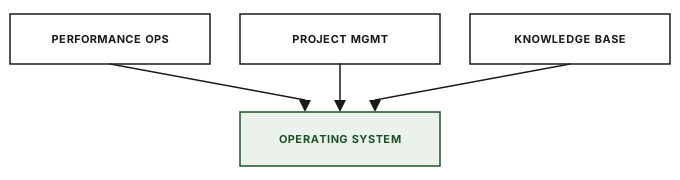
Standardized update format, trigger-based evidence capture, and impact recaps tied to stakeholder-visible deliverables — so the self-review writes itself.
A live registry of all 18+ projects with phase, status, stakeholders, and next milestone — reviewed on a weekly cadence with priority tiers.
A compounding institutional memory — each project adds to the base, each learning reduces setup cost for the next one.
- Designed six operational commands — weekly check-in, stakeholder updates, project status, daily priorities, impact recaps, session logging — each replacing what was previously manual synthesis work
- Built the performance evidence capture so it happens continuously rather than being reconstructed at cycle-end — a complete self-review can be drafted in a single focused session
- Established three governance rule files covering performance operations, project conventions, and session management — the discipline that keeps the system honest over time
- Structured the whole system so it compounds: each check-in adds to the evidence base, each completed project deepens the registry's value
The compounding effect is the real return. You don't feel it in week one. You feel it in month six, when the evidence base answers questions you haven't asked yet.
Portfolio visibility went from reconstructed to real-time.
The system has been in daily use since early 2026. The most significant shift wasn't time saved — it was the quality of leadership presence it enables. When context is always current and evidence is always captured, conversations with stakeholders change. Updates go from defensive to confident.
I built this because I needed it. That's also how I approach organizational problems — if something is slowing you down, I don't add process for the sake of structure. I design the minimum viable system that makes complexity manageable and keeps getting better over time. If you're building or scaling an AI function with many moving parts, this is the kind of operational thinking I'd bring to your team from day one.